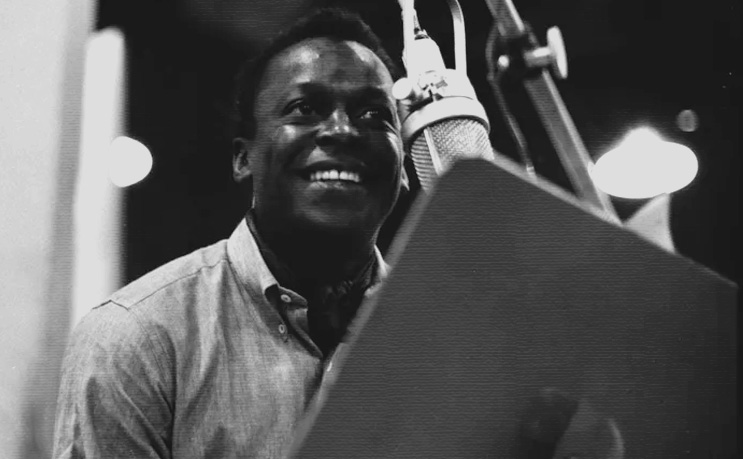
These are the two most essential jazz albums. Not just in my collection — in any serious music collection. They mark a pivot point in the history of recorded music.
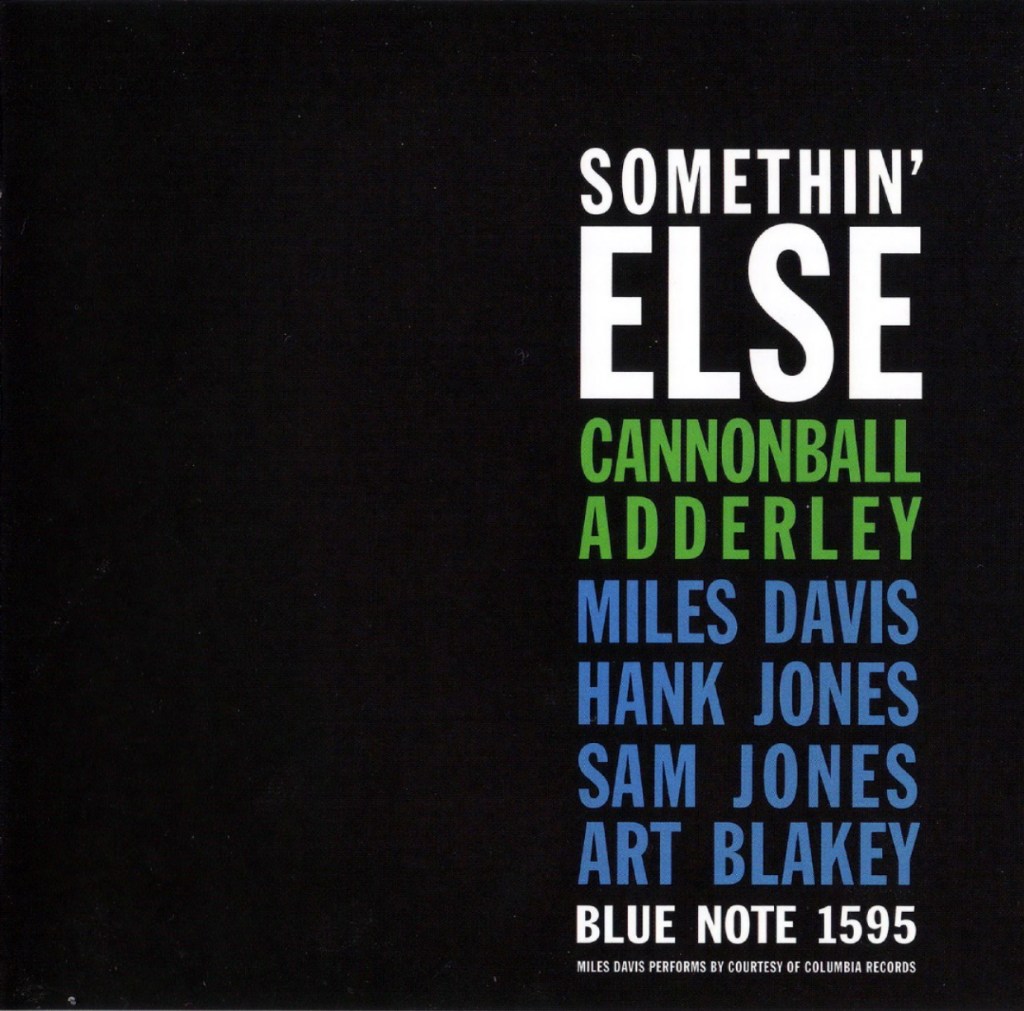
Somethin’ Else (Blue Note, March 1958)
Cannonball Adderley (Alto Saxophone)
Miles Davis (Trumpet)
Hank Jones (Piano)
Sam Jones (bass)
Art Blakey (drums)
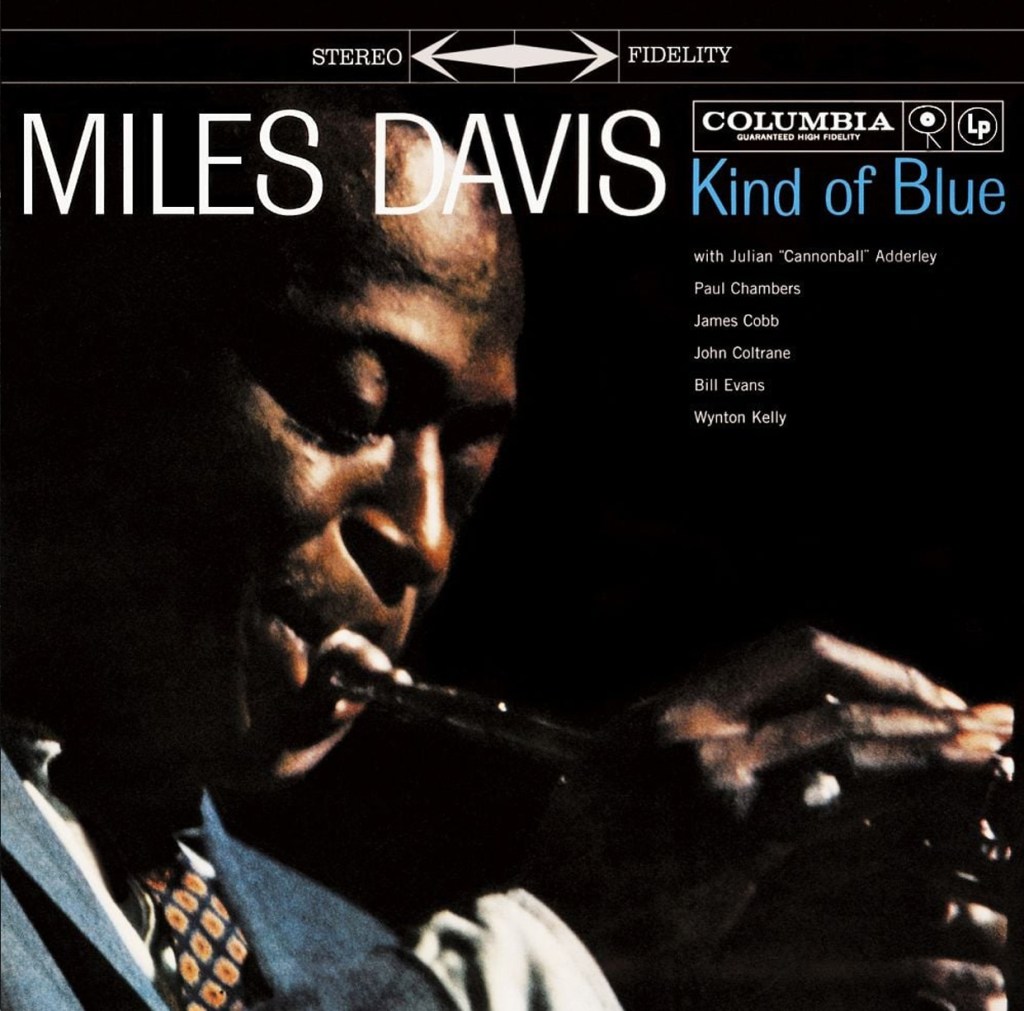
Kind of Blue (Columbia, August 1959)
Miles Davis (Trumpet)
John Coltrane (Tenor Saxophone)
Julian “Cannonball” Adderley (Alto Saxophone)
Bill Evans (Piano)
Wynton Kelly (Piano on “Freddie Freeloader”)
Paul Chambers (Bass)
Jimmy Cobb (Drums)
Sixteen months apart, same two horn players, but they represent completely different things.
Critical Reception
Somethin’ Else received five stars from DownBeat in 1958 and was selected for the Penguin Guide to Jazz “Core Collection.” Critics praised Miles Davis’s lyricism on “Autumn Leaves” and called it “one of the outstanding jazz sets” of the year. Audiophiles consider it the best-sounding Blue Note record ever made.
Kind of Blue is regarded by many critics as the greatest jazz album ever recorded and one of the most influential albums of all time. The Library of Congress selected it for the National Recording Registry in 2002. It’s been certified 5× Platinum and called “a defining moment of twentieth century music.”
One analysis describes Somethin’ Else as “Kind of Blue one year earlier” — the same two horns, but some feel it has “at times a little more heart” because the interplay between Miles and Cannonball is more sympathetic, less dominated by Coltrane’s presence.
My Take
Somethin’ Else is the pinnacle of everything before. Kind of Blue set the standard for everything after.
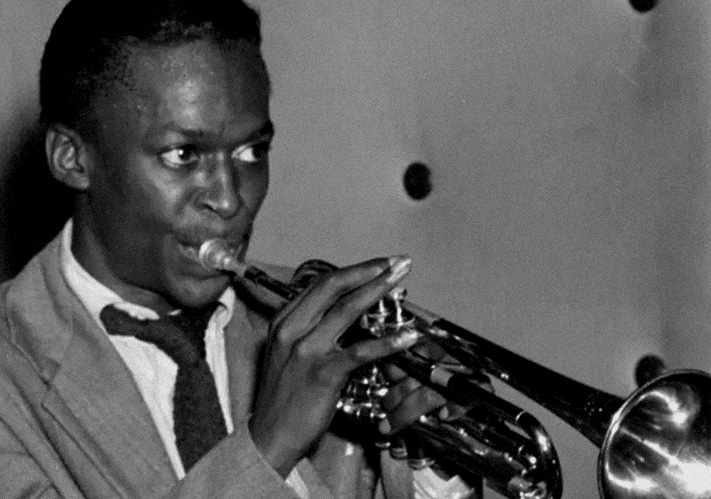
Somethin’ Else: The Culmination
Somethin’ Else takes everything hard bop had developed through the mid-1950s and perfects it absolutely. The Blue Note sound, the bebop vocabulary, the standards reimagined with genius, Art Blakey’s drive, Hank Jones’s elegant piano work, that perfect Rudy Van Gelder recording quality.
“Autumn Leaves” and “Love for Sale” are awesome tracks. Miles’s lyricism on “Autumn Leaves” — that curious, almost Oriental intro, then the way he and Cannonball have this sympathetic conversation throughout. It’s the peak of what two horns could do within that established framework.
This isn’t a stepping stone. It’s the old world at its absolute best.
Kind of Blue: The Pivot
Kind of Blue opens a completely different door. Modal jazz, spaciousness, a new way for musicians to relate to each other, a different compositional approach entirely. It doesn’t build on what came before — it pivots away from it.
“So What” and “Freddie Freeloader” create suspended space where time slows down and opens up. You can just inhabit it. Everything after 1959 has to reckon with this album.
Two Peaks, Not a Progression
They’re not a progression from one to the other. They’re two separate peaks in different mountain ranges.
Somethin’ Else says: “This is how good hard bop can be when every element is exactly right.”
Kind of Blue says: “What if we stopped doing it that way entirely?”
Both are perfect, but they’re perfect in completely different ways, answering completely different questions and I need both.
The Near-Miss
There’s a footnote to all of this that I only came across yesterday, in an article marking 100 years since Davis’s birth.
Kind of Blue — the album that pivoted everything — wasn’t quite what he was after.
In 1959, Davis saw Les Ballet Africaines perform and became fixated on the sound of the mbira, the African finger piano. He wanted to bring that sound into his music, blended with his love of Ravel and half-remembered gospel from his Arkansas childhood. Modal jazz was the vehicle. But when he listened back, he felt he’d missed.
In his autobiography he wrote: “When I tell people that I missed what I was trying to do on Kind of Blue… they just look at me like I’m crazy.”
He singled out So What and All Blues specifically — two of the three tracks that have barely left my rotation in six years.
So the pivot point was real. It just landed somewhere Davis himself hadn’t quite planned. The most influential jazz record ever made was, by its own creator’s account, a near-miss.
That doesn’t make it less. If anything it makes it more interesting. He heard the gap between what he was reaching for and what he got. Nobody else could hear it at all.
Source: Miles Davis’s Kind of Blue is the highest selling jazz record , The Conversation, 27 May 2026.
This blog is written with the assistance of Claude. That’s not a footnote — it’s rather the point.


Leave a Reply